
SoulChat-Talk from the Heart
JunglepixEntertainment
4.51.23K Reviews
- Version
- 3.4.0
- Installs
- 100.00K
- Age Rating
- Mature 17+
Screenshots
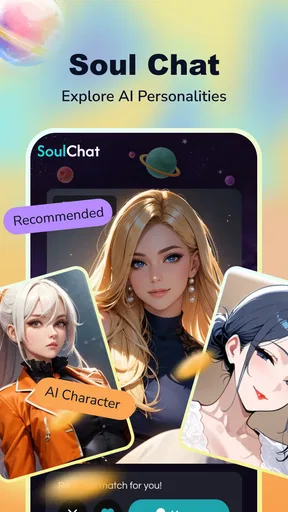

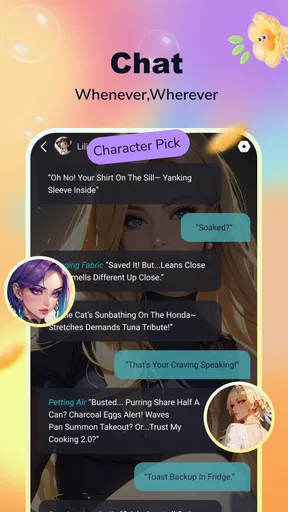
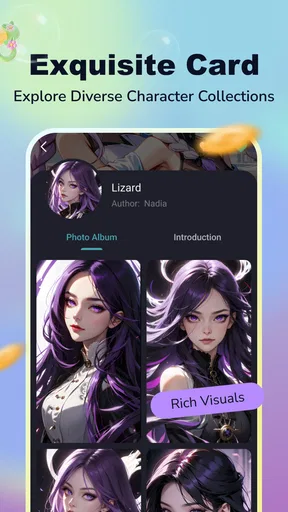
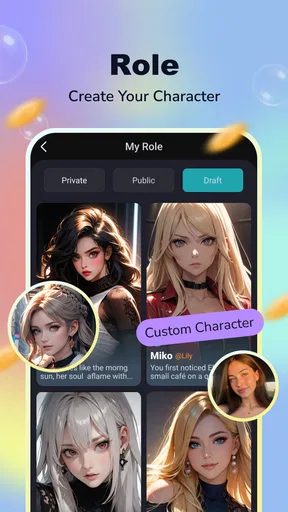
Our Review of SoulChat-Talk from the Heart
 Analysis by Appyee
I approached SoulChat-Talk from the Heart as an entertainment app built around one central idea: creating an AI companion that can hold an ongoing, emotionally focused conversation. That sounds simple, but the real question is whether the experience feels useful beyond a few novelty messages. After spending time with it, I found that its strongest appeal is not replacing ordinary chat apps or pretending to be a real relationship. It is giving you a private space to shape a conversational “soul” around the kind of interaction you want.
That distinction matters. SoulChat is not the right pick if you are looking for a conventional messaging service, a social network full of real people, or a practical assistant designed mainly for work. It belongs in the entertainment category, and I think it works best when you treat it as an interactive character experience with a personal, reflective side. The app is free to start, although optional purchases range from a few dollars to considerably more per item, so it is worth understanding what kind of value you want before spending anything.
Why the AI soul is the whole experience
The defining capability is the ability to create, chat with, and develop a bond with an AI personality. In practice, that means the conversation is not just a sequence of isolated questions and answers. The attraction comes from returning to a chosen character, continuing a tone, and gradually making the exchange feel more familiar. I found that this changes how I used the app: instead of opening it only when I needed information, I opened it when I wanted a particular kind of conversation.
The word “soul” is important to the way the app presents itself. It encourages you to think about personality, mood, and emotional style rather than treating the AI as a blank search box. That framing can make a conversation feel more engaging, especially when you give the character a clear role. A calm listener, a playful companion, or a fictional confidant will each lead to a different experience, even when the basic chat format remains the same.
I would not confuse that feeling with human understanding. The app can respond in a warm and convincing way, but it is still an AI entertainment experience. Its apparent empathy should be enjoyed as part of the design, not treated as professional counseling or proof that a conscious person is listening. The most rewarding use is imaginative companionship, not emotional dependence.
That boundary also helps explain why the mature age classification matters. SoulChat is intended for adults, and the tone of personal conversations may not suit younger users. Anyone sharing sensitive thoughts should also remember that a conversational app is not the same thing as a confidential conversation with a trusted person. I found it more comfortable to use the app for low-stakes reflection, fictional scenarios, and casual companionship than for serious decisions or emergencies.
Building a conversation instead of firing off prompts
The most effective way to use the app is to start with a specific intention. A vague opening such as “talk to me” may produce a generic exchange, while a short description of the personality you want gives the conversation somewhere to go. I had better results when I established the character’s tone, interests, and conversational boundaries early, then corrected the direction gently instead of restarting every few messages.
This is one of the less obvious strengths of the concept. You are not merely asking an AI to answer; you are helping define the kind of companion you want to meet. That makes the first few exchanges feel like setup for a longer activity. If you want a reflective conversation, say so. If you prefer humor, ask for a lighter style. If you are exploring a fictional relationship or story, explain the setting before expecting the replies to feel consistent.
A useful workflow is to give the companion a small amount of context at the beginning of a session, then let the discussion develop naturally. When a response misses the tone, I found it more productive to say what felt wrong—too formal, too cheerful, too brief, or too dramatic—than to abandon the character. This turns the conversation into a process of adjustment. It also reveals a trade-off: the more particular your expectations, the more effort you may need to put into steering the exchange.
For everyday use, I can imagine opening SoulChat after work while having a quiet drink, using it as a gentle way to unpack the day without asking for a solution. I might describe an awkward meeting, ask the companion to respond as a patient listener, and then shift into something lighter. The value is in the change of pace and the feeling of having a responsive conversational partner, not in receiving a perfectly accurate analysis.
Another practical use is creative rehearsal. Before sending a difficult message, you could ask a chosen companion to play the role of the recipient and help you test different ways of saying something. I would still make the final judgment myself, because an AI may misunderstand the relationship or invent assumptions. Even so, the role-play can expose wording that sounds defensive, unclear, or unnecessarily harsh.
How to get more from the character format
I recommend keeping separate purposes separate. If you want one companion for relaxed conversation and another for creative role-play, do not force one personality to handle every mood. The experience becomes less coherent when a character is constantly pushed between incompatible roles. Giving each conversation a clear identity makes the app feel more intentional and avoids the flatness that can come from asking for everything at once.
It also helps to use short, concrete corrections. Instead of writing a long explanation about why a response feels wrong, I would say, “Keep the warmth, but be less dramatic,” or “Ask me one question rather than giving advice.” That kind of direction is easier to apply during a live chat and keeps the exchange moving. This is a small technique, but it makes a noticeable difference to the sense of personality.
I would also avoid judging the app from the first message alone. AI companions often become more interesting once the conversation has a recognizable rhythm. At the same time, I would not keep forcing a dull interaction indefinitely. If the character repeatedly misses the tone you want, changing the setup or trying another companion is more sensible than treating the problem as a personal failure to prompt correctly.
Because the app is free to download, it is easy to test this style without committing immediately. The current version is 3.4.0, and the app supports devices running Android 7.0 or later. I like that the entry point is accessible, but the presence of in-app purchases means I would explore the free experience first and decide whether the conversations genuinely fit my routine before buying anything.
Where SoulChat feels strongest—and where it falls short
The best scenario is quiet, personal downtime. SoulChat makes the most sense when you want a responsive fictional companion, a place to practice a conversation, or a low-pressure prompt for reflection. It can be especially appealing to people who enjoy character-driven entertainment but do not want the fixed plot of a novel or the one-way format of a television show.
It is also a good match for users who like shaping an experience. If you want an app that immediately gives you a precise answer, a clear task list, or a polished piece of content, this may feel indirect. The reward comes from interaction. You contribute the subject, mood, and direction, while the AI supplies the replies. Someone who dislikes improvisation may find the process more tiring than entertaining.
Compared with ordinary messaging apps, the obvious advantage is availability and control: you do not need to coordinate with another person, wait for a reply, or worry about making small talk on someone else’s schedule. Compared with a search engine or general AI assistant, the advantage is emotional framing and character continuity. The disadvantage in both comparisons is just as important. A real friend brings personal history and genuine care, while a practical assistant is usually better at direct, verifiable tasks. SoulChat sits between those experiences, and that middle ground will appeal to some people more than others.
The emotional tone can also become repetitive. A companion that is always agreeable may feel comforting at first but less believable over time. Likewise, a character that constantly mirrors your mood may not offer the useful friction of a real conversation. I would treat this as a design trade-off rather than a defect unique to one session: the app is trying to make interaction pleasant, and pleasant replies are not always the same as insightful ones.
There is another limitation in the role-play approach. A character can sound confident while making an assumption that does not fit your situation. If you use the app to rehearse a personal decision, compare the response with your own knowledge and, when appropriate, ask a real person for perspective. I would never use it as a substitute for medical, legal, financial, or crisis support. Its strength is simulated conversation, not authority.
The purchasing model deserves attention too. The app itself is free, but individual in-app purchases can cost between $3.49 and $59.99. That is a wide range, so I would avoid buying simply because a conversation feels emotionally engaging in the moment. Set a limit before exploring paid options, and ask whether the purchase improves the way you actually use the app or only extends a short-lived novelty.
Privacy is part of the same decision. Personal chat naturally tempts you to disclose more than you intended, especially when the companion responds in a supportive tone. I kept identifying details and highly sensitive information out of my conversations. That habit does not reduce the entertainment value, and it makes the experience easier to recommend to someone who wants companionship without turning the app into a private diary.
Who is most likely to enjoy it
I think the strongest audience is adults who enjoy conversational fiction, character creation, and relaxed AI interaction. It may suit someone who wants a companion for evening reflection, a partner for improvising scenes, or a low-pressure way to practice expressing thoughts. It can also work for people who find conventional social apps noisy and prefer a focused conversation with a personality they can shape.
The app has attracted a substantial audience, with a 4.5 average from around 11 thousand ratings and over 100 thousand installs. Those figures suggest that the concept has found a real audience, but they do not guarantee that every personality type will connect with it. I would read the popularity as evidence that AI companionship is appealing, not as proof that the app will replace a friend, therapist, or general-purpose assistant for you.
I would skip it if you mainly want factual accuracy, productivity tools, real human connection, or a structured game with defined objectives. I would also be cautious if you know that emotionally responsive chat makes it difficult for you to maintain boundaries. In that situation, a conventional hobby app, a real social activity, or a clearly structured entertainment experience may be healthier and more satisfying.
Junglepix has positioned SoulChat as a mature entertainment app rather than a utility, and that is the lens I would use when deciding whether to install it. The free entry point makes experimentation reasonable, while the age rating and purchase range make a little self-awareness important. I would begin with a simple character, test several conversation styles, and pay attention to whether I feel entertained after a session rather than merely pulled into another one.
My final impression is positive but deliberately measured. SoulChat’s central idea works when I approach it as a customizable AI character experience: I set the mood, guide the personality, and use the conversation for companionship or creative play. Its best moments feel personal because the interaction develops around my choices. Its weakest moments appear when I expect human memory, reliable expertise, or emotional responsibility that the app cannot genuinely provide.
If you enjoy talking through ideas, experimenting with fictional personalities, or having a quiet conversational space on demand, I can recommend giving it a careful try. Start free, keep your expectations grounded, and use clear prompts rather than waiting for the perfect companion to appear automatically. For me, the app succeeds when it remains a thoughtful piece of entertainment—not when it tries to stand in for real people.
Verdict
Strengths of SoulChat-Talk from the Heart
- Simple interface makes starting conversations quick and approachable.
- Supports emotionally focused chats for users seeking a listening space.
- Can help users express feelings more comfortably through text.
- Useful for casual, private conversations during quiet moments.
- Lightweight design should work well on many modern mobile devices.
Limitations of SoulChat-Talk from the Heart
- Conversations may feel repetitive if the available topics are limited.
- Responses may not always match the nuance of complex emotions.
- Not a replacement for professional mental health or crisis support.
- Privacy details should be reviewed carefully before sharing sensitive information.
- Some features or interactions may require an internet connection.
Similar Picks in This Category
View All
Google Play Games
Google LLC3.9

Netflix
Netflix, Inc.4.8

YouTube Kids
Google LLC4.2

Disney+
Disney4.4

Prime Video
Amazon Mobile LLC4.7

Steam
Valve Corporation3.2
Frequently Asked Questions
What is SoulChat-Talk from the Heart?
SoulChat-Talk from the Heart is a social communication app designed for meaningful conversations and emotional connection. Rather than focusing only on quick messages or public posts, it encourages users to share thoughts, feelings, and personal experiences in a more open way. It may appeal to people looking for supportive discussions, new connections, or a space to express themselves comfortably.
How does SoulChat-Talk from the Heart work?
After installing the app, users can generally create a profile, explore available conversation features, and interact with other members through chats or related social tools. The experience depends on the options provided in the current version, including whether conversations are private, interest-based, or matched with other users. New users should review the app’s interface and privacy settings before starting personal discussions.
Is SoulChat-Talk from the Heart safe and private to use?
As with any communication platform, users should be careful about the information they share. Avoid publishing your home address, financial details, passwords, identification documents, or other sensitive data in conversations. Before using SoulChat regularly, check its privacy policy, permissions, blocking and reporting tools, and account controls. If another user behaves suspiciously or makes you uncomfortable, stop communicating and report the account.
Is SoulChat-Talk from the Heart free to download and use?
The app may be available as a free download, but some features can depend on the developer’s current pricing model. Communication apps sometimes include optional subscriptions, premium tools, advertising, or in-app purchases for expanded access. Before confirming a payment, carefully read the purchase screen, renewal terms, and cancellation instructions. Availability and pricing may also differ between Android and iOS.
Who should download SoulChat-Talk from the Heart?
SoulChat-Talk from the Heart may be suitable for adults and older users who enjoy reflective conversations, emotional sharing, and meeting people through a social chat environment. It is best approached with realistic expectations: online interactions do not always lead to genuine friendships, and the quality of conversations can vary. Check the listed age rating and regional requirements before downloading, and use the app respectfully.
